Fatekeeper difficulty guide
Fatekeeper Difficulty Guide: How Hard Is the Game?
A source-aware explanation of why Fatekeeper feels demanding, what the current Early Access build does and does not confirm, and how to make each run easier to read.
Steam describes reactive melee, precise spells, distinct enemy patterns, and increasingly challenging enemies. It also warns that Early Access systems can change, so this page separates confirmed facts from practical advice.

The short answer
Fatekeeper is difficult in its current Early Access form because several small pressures arrive together: attacks have recovery, stamina limits your escape options, enemy groups can overlap their threats, and unfamiliar terrain turns a retreat into another decision. The game is demanding rather than uniformly impossible. If you slow the fight down, keep one dependable damage loop, use space before spending stamina, and treat each enemy pattern as information, the same encounters become more manageable. The current Steam description confirms reactive melee, precise magic, distinct enemy patterns, progression, and increasingly challenging enemies, but it does not promise a universal difficulty slider or permanent balance values. Use this Fatekeeper difficulty guide to identify which pressure is actually causing your deaths before changing your whole build.
Direct answer
Is Fatekeeper hard right now?
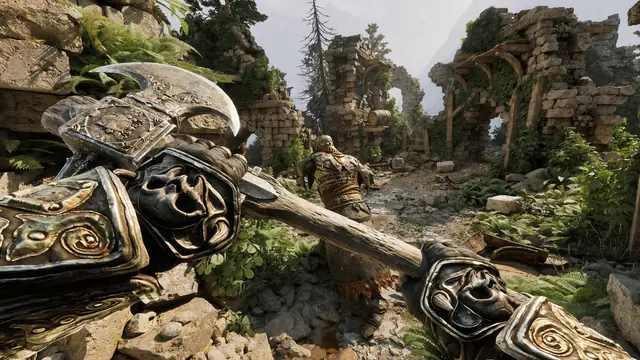
Yes, the current build asks you to read fights and manage resources, but difficulty depends on whether the encounter gives you time and space to make those decisions.The most honest answer to the Fatekeeper difficulty question is that the game is intentionally demanding in ordinary combat. The public beginner coverage repeatedly points to stamina, multiple enemies, dodge and parry timing, spells, and the need to avoid greedy swings. A separate review describes the Early Access combat as brutally challenging compared with more forgiving first-person fantasy games. Those observations describe the current experience, not a permanent difficulty label. Early Access can change enemy damage, recovery, resource costs, or encounter layouts.
Difficulty also changes with familiarity. A first fight can feel unfair when you do not know which animation is a real commitment, where a second enemy is standing, or how long your own attack keeps you locked in place. After one or two observations, the same fight may feel readable. This is why a strong Fatekeeper difficulty guide should explain causes instead of assigning a single number. Ask whether the problem is timing, stamina, crowd control, gear, or navigation.
Players who expect a fast power fantasy may find the opening harsh. Players who enjoy deliberate melee, preparation, and testing a build will find a clearer rhythm once they stop treating every opening as a damage opportunity. The goal is not to remove every risk. It is to choose which risk you can see, then leave enough stamina and space for the next one.
- Expect a learning curve built around timing, recovery, and resource discipline.
- Treat Early Access impressions as a dated snapshot rather than a final difficulty promise.
- Separate a failed decision from an encounter that is genuinely unclear.
- Use a lower-risk response when several threats overlap instead of forcing a perfect counter.
Boundary check
Does Fatekeeper have difficulty settings?
Do not assume an easy, normal, or hard selector exists unless the current build shows it. The sources checked describe challenge systems, not a permanent menu of difficulty levels.Searches for Fatekeeper difficulty settings often mean one of two things: a player wants a named difficulty slider, or the player wants practical settings that make a hard encounter less punishing. The Steam page confirms that the game is in Early Access and that features can change, but the official description checked here does not publish a universal easy, normal, or hard mode. A community discussion also asks for a difficulty slider, which is evidence of a request, not proof that a slider shipped.
The safe answer is therefore conditional. Open the current in-game options and read the version you are actually playing. If a setting exists, record its exact label and whether it affects enemy health, damage, resources, or only accessibility. If it does not exist, do not download an unverified mod or copy a setting from a different build and call it official. Use the systems that are confirmed: spacing, blocking, dodging, parrying, spells, gear, and progression.
This distinction matters for search trust. A player asking for difficulty settings needs to know whether a menu can change the challenge. A player asking how to survive needs a route and decision rules. This page answers both without inventing an easy-mode promise.
| Question | What is confirmed | Safe action |
|---|---|---|
| Is there a permanent easy mode? | Not confirmed by the official page checked for this guide. | Inspect the current build; do not promise a selector in a guide or video. |
| Can the challenge change after updates? | Yes. Steam warns that Early Access is incomplete and may change. | Date your notes and re-check patch notes before copying exact values. |
| Can a build make fights calmer? | Yes, a reliable weapon, armor choice, spell plan, and resource loop reduce avoidable pressure. | Change one variable at a time so you know what helped. |
| Can a mod change difficulty? | A community request or mod listing is not an official feature claim. | Treat it as optional PC experimentation and keep a backup save. |
Combat diagnosis
Why does Fatekeeper feel difficult?
The difficulty comes from interacting decisions. A missed swing can spend stamina, lock your movement, and leave a second enemy time to enter the fight.First, attacks have a cost beyond the damage number. A long swing may have useful reach, but its recovery gives an enemy time to close. A quick weapon may be safer, but it can require more accurate spacing and repeated commitments. If you only compare damage, you will miss the part of the weapon that makes a run feel difficult. Watch how long you are unable to block, move, or cast after each action.
Second, stamina turns a small mistake into a sequence of mistakes. Dodging too early, sprinting through a narrow route, or spending every point on attacks can leave you unable to escape the next hit. A good difficulty adjustment is often to delay one action, let the enemy finish, and keep enough stamina for a defensive response. The public beginner articles emphasize dodge and parry because they convert observation into survival, not because one button solves every encounter.
Third, enemy patterns are part of the puzzle. Steam describes foes with distinct patterns, strengths, and weaknesses. That means a tactic that feels strong against a slow melee target may fail against a ranged threat or a pair that attacks on different rhythms. Learn one pattern at a time and do not use the word difficulty as a substitute for describing the actual move you missed.
Finally, preparation and execution meet in the same room. A build can support your range and resource loop, but it cannot rescue a fight where you cannot see the next attack. Conversely, excellent timing becomes exhausting when your gear forces a damage race you did not choose. Diagnose both sides before changing your character.
| Pressure source | Typical sign | First repair |
|---|---|---|
| Recovery | You take a hit while your own attack is ending. | Use one shorter action and wait for the enemy recovery. |
| Stamina | You can see the attack but cannot dodge or retreat. | Stop sprinting and reserve a defensive buffer. |
| Pattern knowledge | Every enemy appears to attack at the same moment. | Watch one full animation before trying to counter. |
| Crowd overlap | A successful hit is followed by a second threat. | Separate the group with terrain or a controlled retreat. |
| Build mismatch | Your preferred range or resource is unavailable. | Use a backup attack and adjust one gear or skill choice. |
Encounter diagnosis
Enemy groups, bosses, and terrain
A single readable target and a crowded room are different difficulty problems. Solve the arena before trying to solve the perfect attack.Multiple enemies increase difficulty because they change the order of information. You may be watching one wind-up while another foe moves outside the camera. A public difficulty discussion specifically describes frustration during four-to-six-enemy sections and a boss attempt. That comment is a player report, not official balance data, but it explains why crowd encounters deserve their own section in a practical guide.
Start by choosing an exit. Before attacking, identify a doorway, open floor, or angle that keeps one threat in front of you. Do not retreat into a drop, a fire source, or a corner you have not inspected. If the room is too wide, use a narrow route to make the group approach in a line; if it is too narrow, step out and reset rather than trading hits in a doorway.
Bosses add a second layer: their moves are easier to notice but more expensive to miss. A boss guide should list exact patterns only when the current build proves them. For a general Fatekeeper difficulty guide, use a repeatable method: observe one attack, identify the safe response, take a short opening, then return to spacing. This keeps advice valid when an animation or damage value changes.
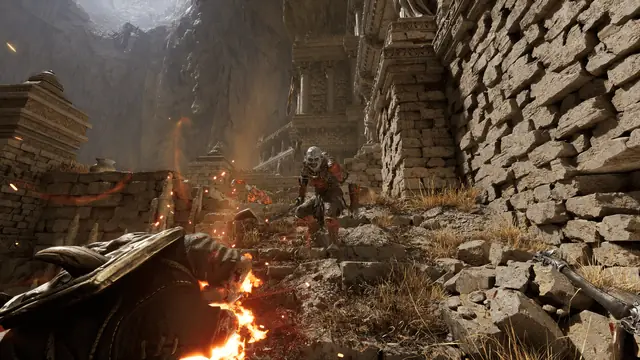
Terrain is not decoration. Low visibility, elevation, hazards, and long recovery paths alter what a safe dodge means. If a room makes the camera or route unreadable, lower your ambition. Clearing one target, backing out, and returning with a known route is a successful difficulty strategy, not a failure to play aggressively.
- Choose an exit before the first swing.
- Keep the most dangerous target in front of the camera.
- Treat a crowd report as context, not a universal damage statistic.
- Reset the room when terrain hides the next decision.
Practical choices
Builds and gear that reduce pressure
The easiest build is the one whose normal loop remains available when an enemy refuses your ideal range.Use the existing builds and weapons pages for deeper loadout detail, but start the difficulty decision with one question: what action do you want to repeat under stress? A balanced melee-and-magic setup is forgiving because it gives you a close-range answer and a way to create space. A heavy melee route can be satisfying when you read commitments, but long recovery punishes panic swings. A spell-led route can control distance, yet it needs resource discipline and a fallback when a cast is unsafe.
Choose armor by the mistake it prevents. If you regularly lose to one missed dodge, prioritize a setup that lets you survive a mistake and recover. If you are safe but slow, test a lighter option and observe whether the extra movement is useful rather than assuming it is better. Keep a simple note of reach, recovery, stamina cost, and the situations where the item helped. Exact Early Access numbers can move; the comparison habit remains useful.
Relics, artifacts, and coatings should support the loop you already perform. A bonus that only triggers in a rare situation may look powerful while doing nothing for your ordinary encounters. Likewise, buying every spell or splitting every skill point can make the character feel weak because no single answer is reliable. Spend enough points to make one response consistent before opening a distant branch.
A low-pressure build still needs a fallback. Decide what you do when the preferred weapon is out of range, a spell is interrupted, stamina is low, or a second enemy arrives. The fallback can be a block, a kick, a short retreat, or a basic attack. The point is to preserve choices while the main loop is unavailable.
Name one repeatable loop
For example: hold mid-range, wait for a committed swing, use one melee attack, then reset. Write the loop in one sentence.
Add one resource support
Improve stamina, magic sustain, recovery, or positioning only when it protects that loop in real encounters.
Test one gear change
Run several ordinary fights with one item changed. Compare survival and control, not just the largest damage number.
Keep a fallback
Choose a block, retreat, kick, or simple spell for the moment when the preferred range disappears.
A calmer method
A low-friction practice route
Use short tests to turn Fatekeeper difficulty into a sequence of decisions you can evaluate.Begin in a fight you can leave or restart without losing a long route. The purpose is not to prove that you can win while exhausted. It is to isolate one question, such as whether an enemy attack can be blocked, when a dodge is safest, or how much recovery your weapon needs. If a practice attempt includes a second enemy, a hazard, and a new spell at once, you will not know which variable caused the result.
For the first attempt, observe. Let the enemy complete one attack and note the wind-up, forward commitment, impact, and recovery. Keep your camera steady and stay far enough away to retreat. The second attempt should change one choice only: block, dodge, parry, or step back. After a success, use a short counter or reset your space; do not add a long combo just because the opening exists.
When stamina is low, stop testing damage. Walk, guard, or move to an open angle until the resource returns. This feels slower, but it prevents a visible recovery problem from becoming a death that you mislabel as bad gear. When several threats appear, split the encounter or retreat. A clean reset gives you better information than a desperate trade.
Keep a tiny log after each session: enemy, move, response, result, and one change for the next try. This is enough to notice whether you are acting too early, standing too close, or spending the wrong resource. It also makes an Early Access update easier to evaluate because you can compare the new behavior with a dated observation.
Pick one target
Use a readable melee enemy or a low-pressure encounter. Avoid a crowded room while you are learning the cue.
Watch one complete move
Name the visible commitment and recovery before you press an attack or defensive input.
Choose one response
Test a block, dodge, parry, kick, or retreat. Change only the timing or spacing on the next attempt.
Reset after the result
Take a short counter after a clear opening, then return to neutral space so the next test starts clean.
Record what changed
Write one sentence about the cue and one sentence about the next experiment. Do not turn a single miss into a universal rule.
Keep the boundary clear
Early Access limits and fair expectations
The current Fatekeeper difficulty answer is a dated explanation, not a promise that every future build will use the same numbers or settings.Steam labels Fatekeeper an Early Access game and says the version is incomplete and may change. The developer description also says the current build contains the core gameplay elements for the first few hours while story content, progression mechanics, and supporting systems are planned to grow. That context explains why a difficulty page should avoid permanent claims about enemy health, exact stamina costs, or a final mode list.
Use official patch notes and the current in-game menu for changes. Community videos can show a useful route, but their date, settings, and control layout matter. If a video says a weapon is easy, ask what version it used, what enemy it tested, and whether the result came from damage, reach, recovery, or a safer arena. This page keeps those categories separate so a future update can be described without rewriting the whole decision method.
The practical conclusion is stable: read the attack, preserve a defensive option, use a build that supports your preferred range, and retreat before the room becomes unreadable. Those habits do not remove challenge, but they make the challenge legible. Re-check this guide after a major update, especially if the patch changes enemy behavior, stamina, spell costs, or accessibility settings.
- The official Steam page is the source for the Early Access boundary and current feature description.
- Community reports help identify player pain points but are not permanent balance data.
- Exact values, selector labels, and mod behavior need a dated build check.
- A future difficulty slider would change the settings answer, not the need for clear combat decisions.
What to verify before calling a run unfair
Check the current build, control bindings, stamina state, enemy count, and retreat route. If one of those changed, repeat the same short test before replacing the whole build.
Fatekeeper difficulty FAQ
Is Fatekeeper hard?
Fatekeeper is demanding in the current Early Access build because reactive melee, stamina, recovery, enemy patterns, and crowded encounters compound. It becomes more readable when you preserve space, learn one move at a time, and keep a fallback response.
Does Fatekeeper have an easy mode or difficulty slider?
The official Steam page checked for this guide does not publish a universal easy mode or slider. Check the current in-game options after updates; do not treat a community request or mod listing as an official feature.
Why do groups of enemies feel much harder than one enemy?
A group changes the order of information. While you watch one attack, another enemy can enter from outside the camera or force a second dodge. Choose an exit, separate the group, and reset when the arena hides the next decision.
What is the best build for a new player who finds Fatekeeper difficult?
Start with one dependable melee or spell loop, add resource or recovery support, and keep a simple fallback such as blocking, retreating, or kicking. Use the builds and weapons pages for detailed loadout planning, and change one variable at a time.
Should I use a parry or a dodge when learning combat?
Use the response you can read safely. A parry can create a strong opening when the attack is clear; a block or dodge is better when the cue is uncertain, stamina is low, or another enemy can punish the recovery.
Will Fatekeeper difficulty change during Early Access?
It can. Steam warns that Early Access is incomplete and may change, and the developer plans additional content and systems. Re-check current patch notes, settings, enemy behavior, and resource costs before trusting an old exact value.
Sources and update boundary
The page uses current first-party Early Access context plus clearly labeled player and editorial observations.
- Fatekeeper on Steam — Official Early Access description, checked November 15, 2026.
- GameSpot: 6 beginner tips in Fatekeeper — Editorial combat tips covering dodge, parry, spells, kick, materials, and torch use.
- GameIndustry: Fatekeeper Shows Brutal Promise — Editorial Early Access review used as a dated difficulty impression, not official balance data.
- Games.gg: Fatekeeper combat guide — Guide structure used to compare expected combat, build, and beginner coverage.